
Featured Resources
-
As classroom technology and generative AI evolve at breakneck speeds, education leaders face a critical choice: rely on flashy, general-consumer tools or invest in secure, purpose-built infrastructure. The Project Unicorn Q2 Brief cuts through the digital noise to show why robust data standards, modernized data architecture, and evidence-based procurement are the ultimate guardrails for student safety and academic success.
Download the Q2 Interoperability Brief to equip your leadership, technology, and procurement teams with the standards-based toolkits, rubrics, and templates needed to build a safe, future-ready digital ecosystem.
-
2026 Quarter 1 AI & Interoperability Brief Release
Interoperability is foundational to AI success in education, and building an underlying structure grounded in data standards and data maturity is key to implementing AI that will truly benefit schools and students.
The 2026 Quarterly AI and Interoperability Brief Series explores the intersection of interoperability and AI, highlighting the latest trends, case studies, and tools you can use to improve your educational technology ecosystem.
-
Currently, the lack of standardized, national definitions for core service terms creates a systemic ‘transfer gap.’ This lack of clarity often results in significant delays for students waiting to receive comparable services in a new district. To address this, researchers convened an expert panel to establish a much-needed consensus on these terms.
-
AI Data Use and Protection - Worksheet
In the rush to adopt an AI tool, don’t let data security become an afterthought. The AI Data Use and Protection Worksheet is designed to help cross-functional leaders—from the CISO to General Counsel—a clear, standardized vetting process.
This worksheet allows teams to create a side-by-side risk matrix for every vendor, allowing them to make a safe, confident, and informed decision before entering a vendor agreement.
-
Considerations for the School Districts in Considering Large Scale AI Model Deals
As Artificial Intelligence (AI) and frontier AI models rapidly reshape the educational landscape, school systems face a dual challenge: harnessing these tools' transformative potential while rigorously safeguarding student data, privacy, and well-being. Procurement is no longer just about purchasing; along with AI literacy, it is the first line of defense in responsible AI governance.
The following slide deck is available for consideration and understanding.
-
Considerations for the School Districts in Considering Large Scale AI Model Deals
As Artificial Intelligence (AI) and frontier AI models rapidly reshape the educational landscape, school systems face a dual challenge: harnessing these tools' transformative potential while rigorously safeguarding student data, privacy, and well-being. Procurement is no longer just about purchasing; along with AI literacy, it is the first line of defense in responsible AI governance.
For years, Project Unicorn has championed the need for data to flow seamlessly and securely between systems to inform instruction and operations. Simultaneously, the EDSAFE AI Alliance has led the global charge on the SAFE (Safety, Accountability, Fairness, and Efficacy) benchmarks for AI adoption in education.
Now, as "frontier models"—highly capable, large-scale AI systems—enter our schools, these two missions must converge. Procurement is the intersection where safety meets connectivity.
We developed this resource to bridge the gap between technical data governance and ethical AI implementation, responding to practical needs from our work leading 29 school district policy labs and 10 state policy labs. These questions are designed to help district and state leadership vet tools not just for what they can do, but for how they fit into a secure, interoperable, and learner-centered ecosystem. Whether you are evaluating a standalone AI app or integrating a large-scale frontier model, this guide can be part of your blueprint for responsible innovation.
Resource Database

Standards Certification Jump-Start Guide
Being certified to a data standard signals to customers that your product is truly interoperable. Certification gives buyers the confidence that their educational data will flow seamlessly and securely between their applications. Discover steps to certification for Ed-Fi Alliance, Access 4 Learning Community, and IMS Global here.

Ed-Fi: A Practical Guide to Interoperability Use Cases
Clarity around how the Ed-Fi Alliance Standards and IMS Global Learning Consortium® Standards can be used in support of educators is a common and increasingly frequent request from the Ed-Fi Community. In many cases, Ed-Fi and IMS Global standards often seek to solve different problems, and therefore a better understanding of the tools and functionality available for various use cases is important to selecting the best solution for a given use case. Each organization’s technologies provide real, and distinct, value to users in their daily lives and work….
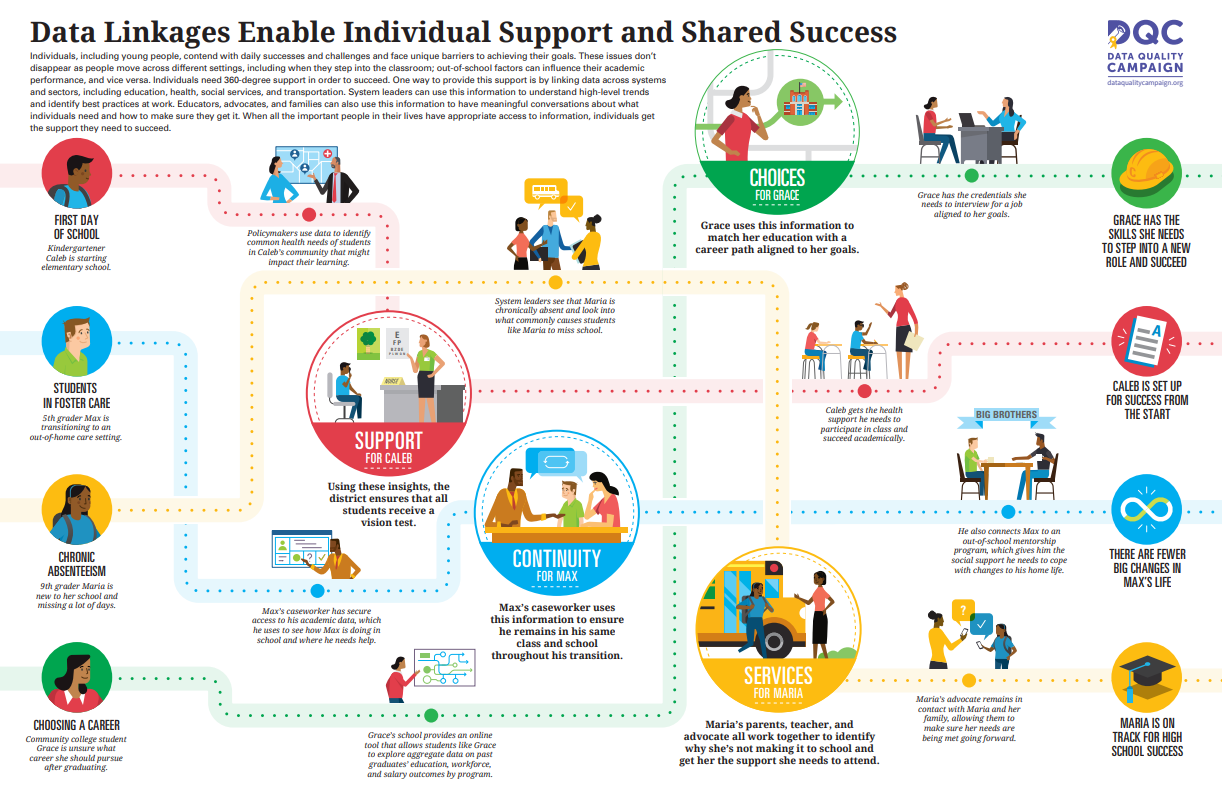
DQC Data Linkages Enable Individual Support and Shared Success
This infographic illustrates that, when all the important people in their lives have appropriate access to information, individuals get the support they need to succeed.

Interoperability Standards in Education
Learn about the different organizations in K-12 that provide data standards to make Data Interoperability possible.
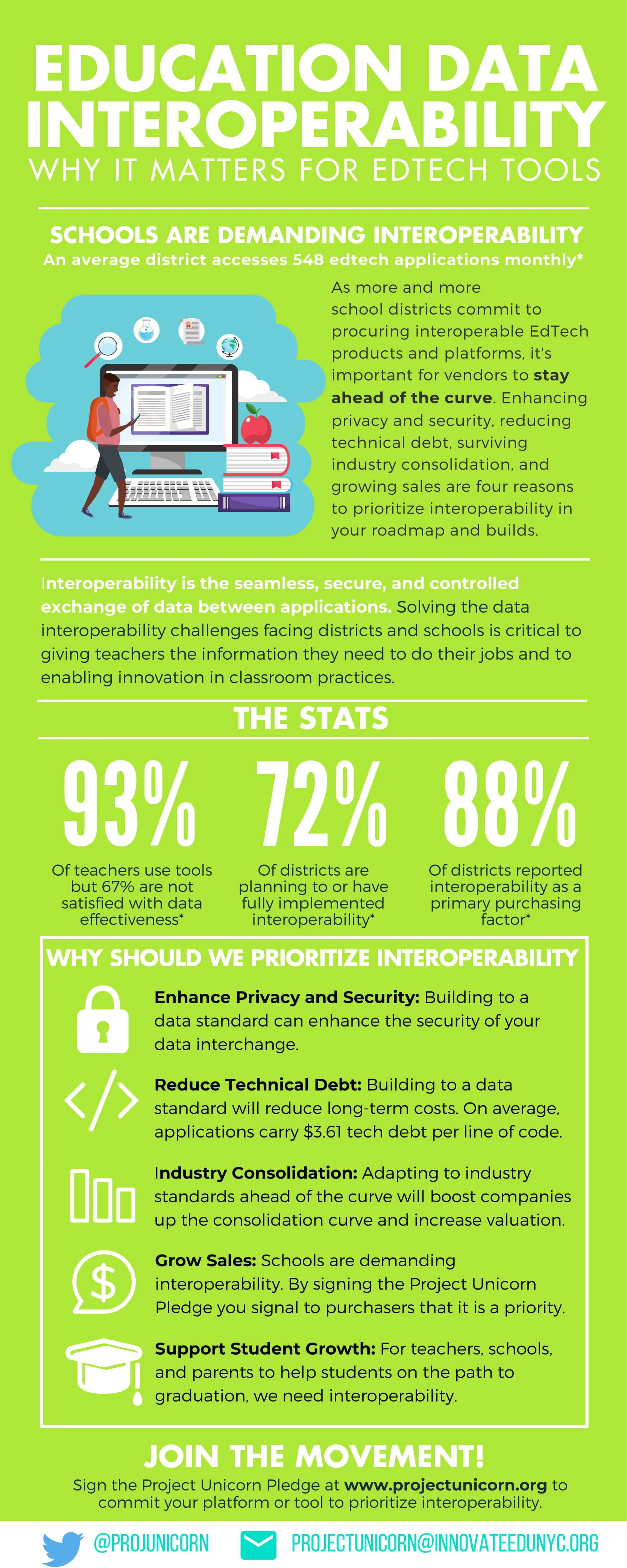
Why Data Interoperability Matters for Vendors
Learn more about why Data Interoperability matters for Vendors.
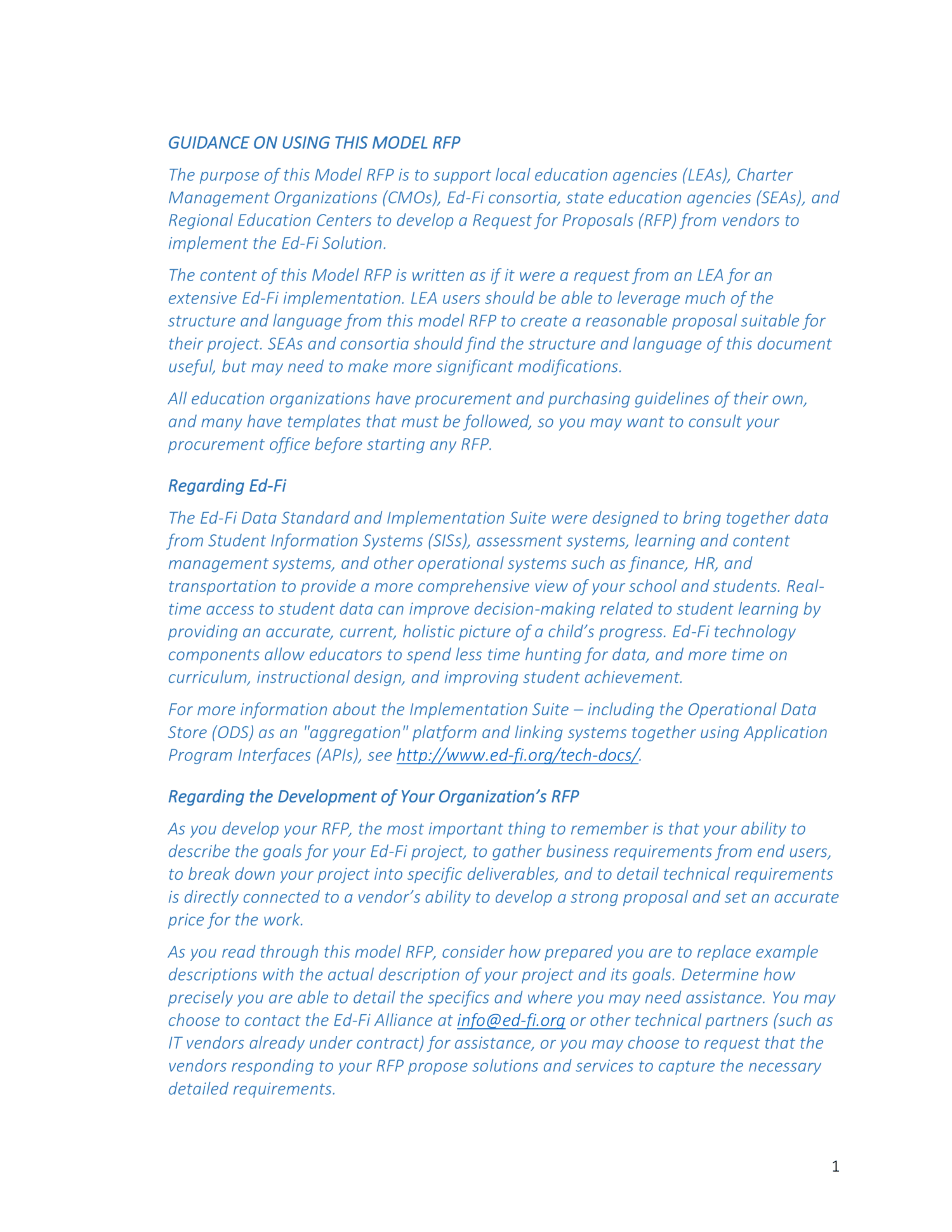
Ed-Fi Sample RFP Language
Insert language from our partners at EdFi in your requests for proposals so that your school or district procures only technologies that are interoperable.

Interoperability Rubric
How does your school network rank? Review the rubric to assess your tier of interoperability.
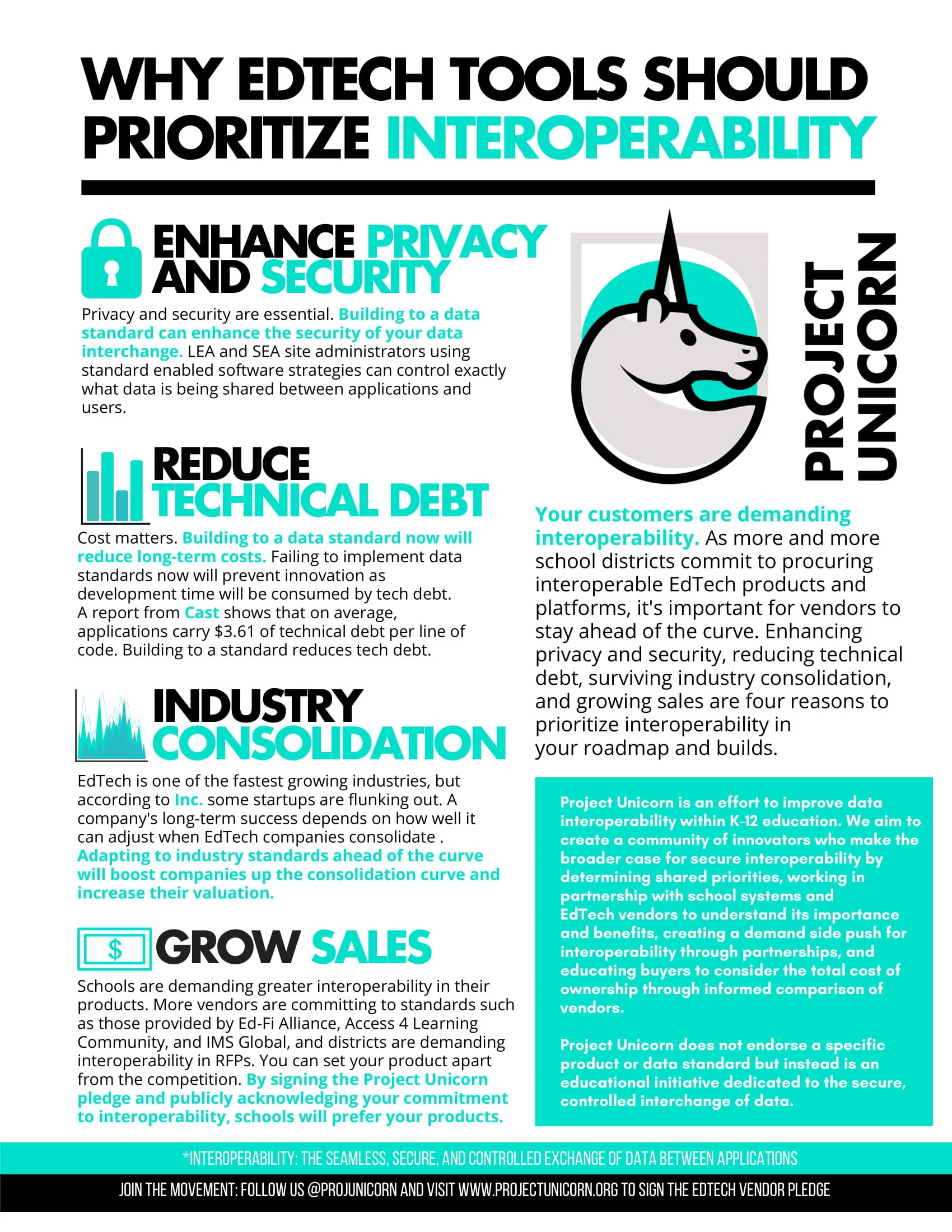
Why Vendors Should Prioritize Interoperability
Your customers are demanding interoperability. As more and more school districts commit to procuring interoperable EdTech products and platforms, it's important for vendors to stay ahead of the curve.

Project Unicorn Index
In partnership with Lea(R)n Platform, Project Unicorn has launched a free service for schools to research EdTech products with a Project Unicorn Index. The hub is designed to allow for comprehensive edtech management, informed decision making and increased transparency in purchasing for schools and districts.

Empower Learning - Case Study
Progress reports go out on Thursday and the teachers are up in arms because they can’t enter scores into their online gradebook. This isn’t because the internet is down or due to a device malfunction—it’s because the online gradebook isn’t able to share data with the student information system (SIS)...
Marisa Kaplan, EdSurge

Interoperability With MiDataHub and KReady - Case Study
Data should maintain its meaning as it gets passed between schools, districts, and even states. Interoperability standards assist in providing solutions for increasing concerns over linking student, teacher, school, and district data to create actionable outcomes.
Corey Matlack, No.Inc

Oklahoma's Interoperability Story - Case Study
“The Oklahoma SDE serves 512 traditional school districts, 28 charter school districts, 58 charter school sites, and over 1,795 schools. With over 693,700 students in the state, the OK SDE works hard to meet the challenging needs of students with educational technology.”
Ariana Bauer, CPSI, Ltd.

Scaling Access and Impact: Realizing the Power of EdTech
Read this report to learn more about the impact of equitable edtech and how it can improve edtech and learning at scale from Omidyar Network.

EdMatrix - Education Standards Directory
EdMatrix is a cooperative effort to create a directory of Education Standards. The emphasis is on Education Data standards but important Competency & Achievement standards and Design & Practice standards are also included.

Privacy, Security, and Interoperability Convening Read-Outs
Read major takeaways, lessons, and highlights from the event held by Project Unicorn and Future of Privacy Forum in December 2018.

In Partnership with Providers: The Importance of the Vendor Community
From Ed-Fi Alliance, join Troy Wheeler as he discusses the value and role of technology providers in the larger movement towards interoperability.

You Need Data to Personalize Learning
This infographic from the Data Quality Campaign shows how critical data is to personalizing education.

Reasoning Mind - Case Study
Is Meaning Lost When Data Is Exported? Why Reasoning Mind Takes a 'Wait And See' Approach
What you need in order for an API to work is for all districts to use the same set of standards to connect to vendors, but that is technically complicated.”
William McGuinness, Director of Product Management

Zeal - Case Study
Zeal CEO John Danner: Want to Make Data Actionable? Start With Building the Right Culture
The solution that’s been proposed is to roll up data from all systems and present it in a dashboard. Because the data isn’t well-aligned, it’s a ‘garbage in, garbage out’ problem.”
John Danner, Chief Executive Officer