
Featured Resources
-
As classroom technology and generative AI evolve at breakneck speeds, education leaders face a critical choice: rely on flashy, general-consumer tools or invest in secure, purpose-built infrastructure. The Project Unicorn Q2 Brief cuts through the digital noise to show why robust data standards, modernized data architecture, and evidence-based procurement are the ultimate guardrails for student safety and academic success.
Download the Q2 Interoperability Brief to equip your leadership, technology, and procurement teams with the standards-based toolkits, rubrics, and templates needed to build a safe, future-ready digital ecosystem.
-
2026 Quarter 1 AI & Interoperability Brief Release
Interoperability is foundational to AI success in education, and building an underlying structure grounded in data standards and data maturity is key to implementing AI that will truly benefit schools and students.
The 2026 Quarterly AI and Interoperability Brief Series explores the intersection of interoperability and AI, highlighting the latest trends, case studies, and tools you can use to improve your educational technology ecosystem.
-
Currently, the lack of standardized, national definitions for core service terms creates a systemic ‘transfer gap.’ This lack of clarity often results in significant delays for students waiting to receive comparable services in a new district. To address this, researchers convened an expert panel to establish a much-needed consensus on these terms.
-
AI Data Use and Protection - Worksheet
In the rush to adopt an AI tool, don’t let data security become an afterthought. The AI Data Use and Protection Worksheet is designed to help cross-functional leaders—from the CISO to General Counsel—a clear, standardized vetting process.
This worksheet allows teams to create a side-by-side risk matrix for every vendor, allowing them to make a safe, confident, and informed decision before entering a vendor agreement.
-
Considerations for the School Districts in Considering Large Scale AI Model Deals
As Artificial Intelligence (AI) and frontier AI models rapidly reshape the educational landscape, school systems face a dual challenge: harnessing these tools' transformative potential while rigorously safeguarding student data, privacy, and well-being. Procurement is no longer just about purchasing; along with AI literacy, it is the first line of defense in responsible AI governance.
The following slide deck is available for consideration and understanding.
-
Considerations for the School Districts in Considering Large Scale AI Model Deals
As Artificial Intelligence (AI) and frontier AI models rapidly reshape the educational landscape, school systems face a dual challenge: harnessing these tools' transformative potential while rigorously safeguarding student data, privacy, and well-being. Procurement is no longer just about purchasing; along with AI literacy, it is the first line of defense in responsible AI governance.
For years, Project Unicorn has championed the need for data to flow seamlessly and securely between systems to inform instruction and operations. Simultaneously, the EDSAFE AI Alliance has led the global charge on the SAFE (Safety, Accountability, Fairness, and Efficacy) benchmarks for AI adoption in education.
Now, as "frontier models"—highly capable, large-scale AI systems—enter our schools, these two missions must converge. Procurement is the intersection where safety meets connectivity.
We developed this resource to bridge the gap between technical data governance and ethical AI implementation, responding to practical needs from our work leading 29 school district policy labs and 10 state policy labs. These questions are designed to help district and state leadership vet tools not just for what they can do, but for how they fit into a secure, interoperable, and learner-centered ecosystem. Whether you are evaluating a standalone AI app or integrating a large-scale frontier model, this guide can be part of your blueprint for responsible innovation.
Resource Database
Nebraska Department of Education - Legislative Study
This study examines the state of Nebraska’s education data systems, analyzing their ability to meet the needs of teachers, researchers, and policymakers. Informed by over 200 state education leaders, the resource explores system costs, administrative interrelationships, and data accessibility. It provides a strategic one, three, and five-year plan to upgrade and modernize the state's data infrastructure for improved school performance and accountability.

A Retrospective Study - The Michigan Data Hub
This follow-up study compares the actual ROI of the Michigan Data Hub (MiDataHub) against its original 2016 estimates. With a total state investment of $23.7 million, the report reveals significant efficiency gains: while standard integrations cost $7,532, MiDataHub integrations average just $3,711. Learn how an annual investment of only $3.47 per student has optimized data system integrations and delivered measurable value to Michigan districts and taxpayers.
2016 ROI Study - The Michigan Data Hub
Managing K-12 data costs Michigan districts over $160 million annually. This study highlights how the Michigan Data Hub provides a standardized platform to eliminate duplicative efforts and automate compliance reporting, offering a clear path to reducing these costs by one-third. By leveraging shared tools and a common data infrastructure, the Hub demonstrates how districts can save at least $56 million per year while shifting from a compliance mindset to smarter, year-round data management.
New Release! — Executive Summary: Ensuring Timely and Consistent Implementation of IEPs
The lack of standardized, national definitions for core special education terms creates a systemic transfer gap for military-connected students. When families relocate, this lack of clarity often leads to significant delays in students receiving comparable services in their new school districts. To ensure the timely and consistent implementation of IEPs, researchers convened an expert panel to establish a national consensus on these essential service terms. Bridging this gap is critical to maintaining educational continuity and support for students with disabilities during military transitions.
2026 Quarter 1 AI & Interoperability Brief Release
Interoperability is the essential foundation for AI success in K-12 education. To implement AI that truly benefits schools, leaders must build an underlying structure grounded in mature data standards. The Q1 2026 Quarterly AI and Interoperability Brief explores this critical intersection, highlighting the latest trends, case studies, and tools needed to optimize your educational technology ecosystem for the AI era.
AI in Education: Negotiating for Our Future - A Worksheet for K12 Districts
This worksheet allows teams to create a side-by-side risk matrix for every vendor, allowing them to make a safe, confident, and informed decision before entering a vendor agreement.
AI in Education: Negotiating for Our Future - A Slide Deck for K12 Districts
As Artificial Intelligence (AI) and frontier AI models rapidly reshape the educational landscape, school systems face a dual challenge: harnessing these tools' transformative potential while rigorously safeguarding student data, privacy, and well-being. The following slide deck is available for better understanding.
AI in Education: Negotiating for Our Future - A Checklist for K12 Districts
We developed this resource to bridge the gap between technical data governance and ethical AI implementation, responding to practical needs from our work leading 29 school district policy labs and 10 state policy labs. These questions are designed to help district and state leadership vet tools not just for what they can do, but for how they fit into a secure, interoperable, and learner-centered ecosystem. Whether you are evaluating a standalone AI app or integrating a large-scale frontier model, this guide can be part of your blueprint for responsible innovation.

Better Edtech Buying: A Practical Guide - Revised Edition
To provide more insight and guidance into how edtech purchasing happens and consider how educators and leaders can work together to make more informed purchasing decisions, the International Society for Technology in Education (ISTE) and Project Unicorn have released Better Edtech Buying: A Practical Guide - Revised Edition.
Privacy, Security, Interoperability
Why One Supports the Other: Data interoperability is a helpful component to building and maintaining quality software. Interoperability isn't a panacea, but making intentional and informed choices about implementing an interoperability standard contribute to better development practice, better privacy practice, and better security practice. Here are 5 ways interoperability, privacy, and security enhance each other.

Ed-Fi: A Practical Guide to Interoperability Use Cases
Clarity around how the Ed-Fi Alliance Standards and IMS Global Learning Consortium® Standards can be used in support of educators is a common and increasingly frequent request from the Ed-Fi Community. In many cases, Ed-Fi and IMS Global standards often seek to solve different problems, and therefore a better understanding of the tools and functionality available for various use cases is important to selecting the best solution for a given use case. Each organization’s technologies provide real, and distinct, value to users in their daily lives and work….
Privacy and Equity in the New School Year
As local and state governments, businesses, and institutions across the country implement the first phases of reopening after weeks of lockdown, schools are beginning to plan for learning this fall…
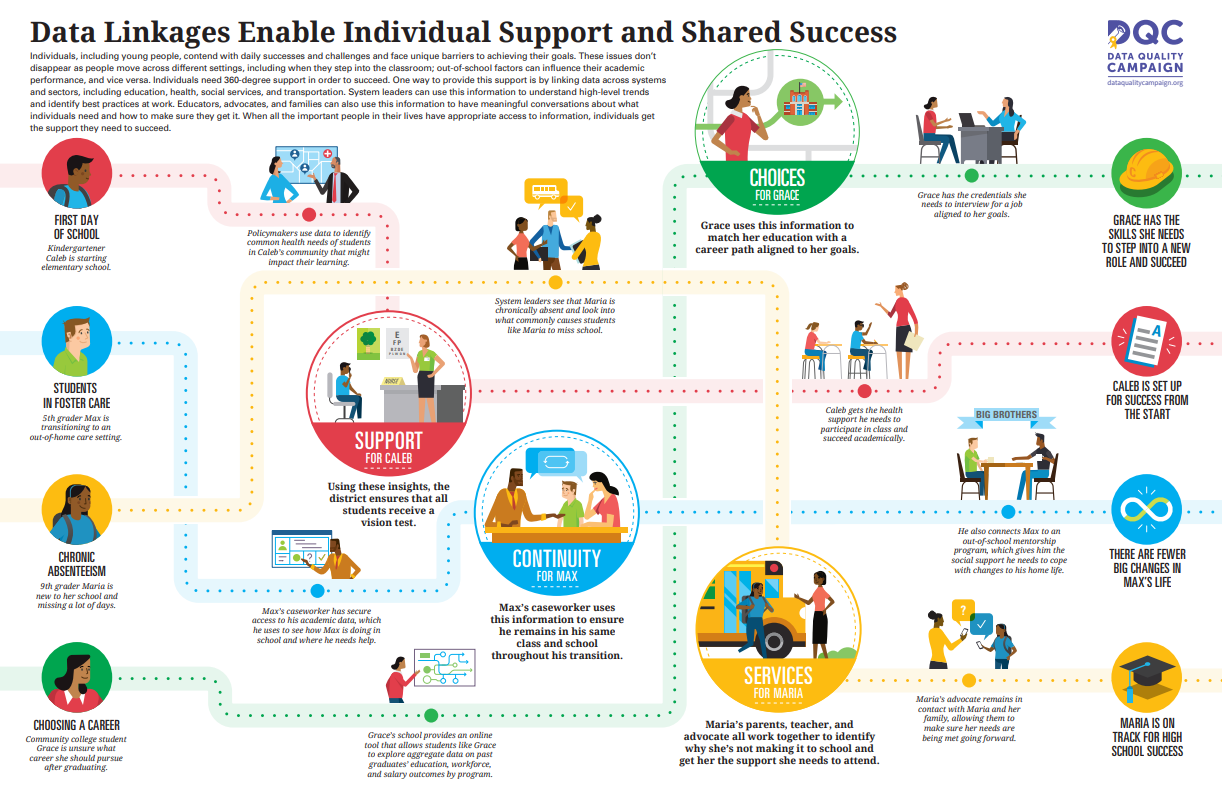
DQC Data Linkages Enable Individual Support and Shared Success
This infographic illustrates that, when all the important people in their lives have appropriate access to information, individuals get the support they need to succeed.

Interoperability Standards in Education
Learn about the different organizations in K-12 that provide data standards to make Data Interoperability possible.

Why Data Interoperability Matters for Schools
Learn more about why Data Interoperability matters to schools.
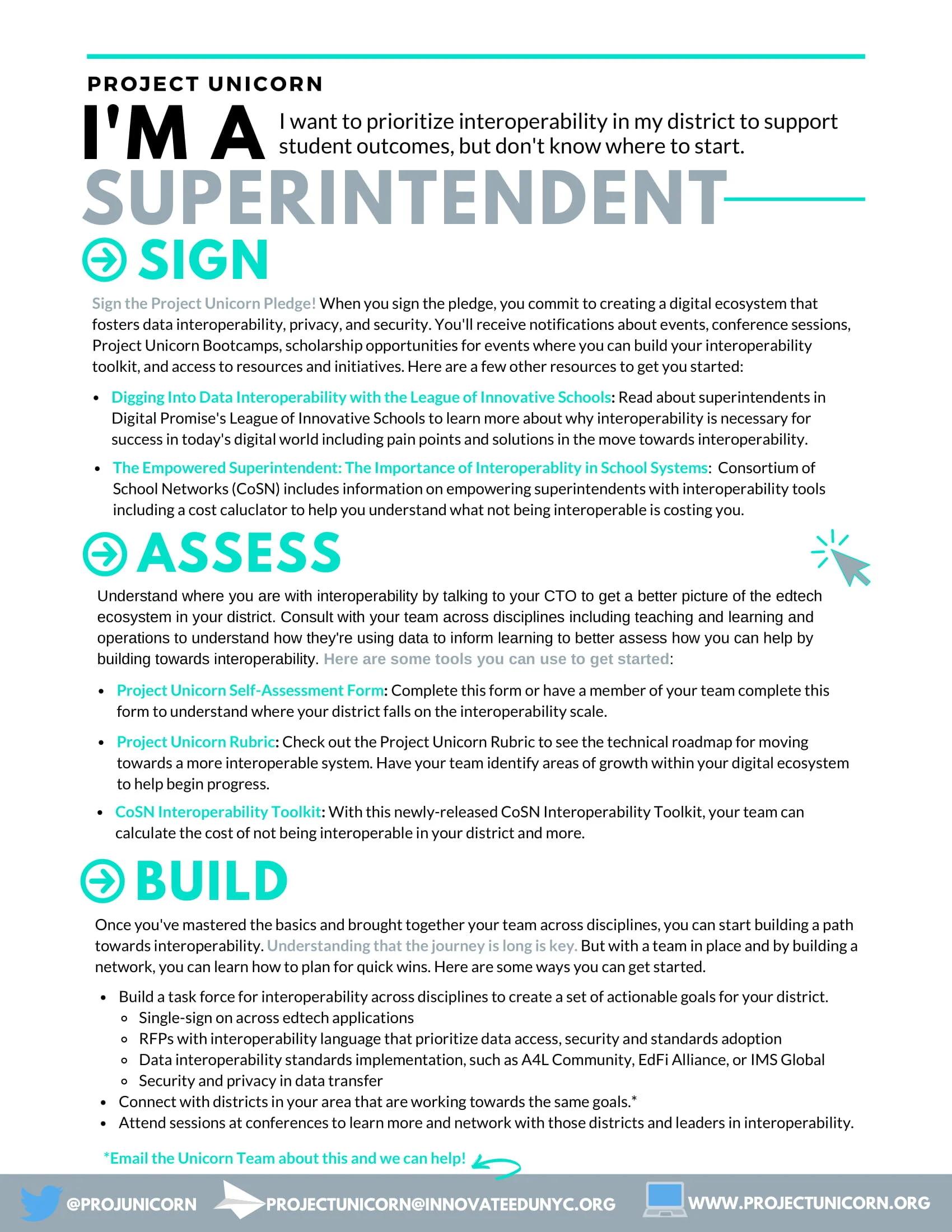
First 3 Steps for Superintendents
Learn more about starting your journey towards interoperability as a superintendent.

State Strategies to Develop Teacher Capacity for Personalized, Competency-Based Learning
This issue brief shares state policy recommendations and action steps for policymakers who are supporting the redesign of educator workforce systems.

I'm a District: Where do I Start?
School District Administrators: If you are just getting started with interoperability, use these first practical steps to begin.

Interoperability Rubric
How does your school network rank? Review the rubric to assess your tier of interoperability.
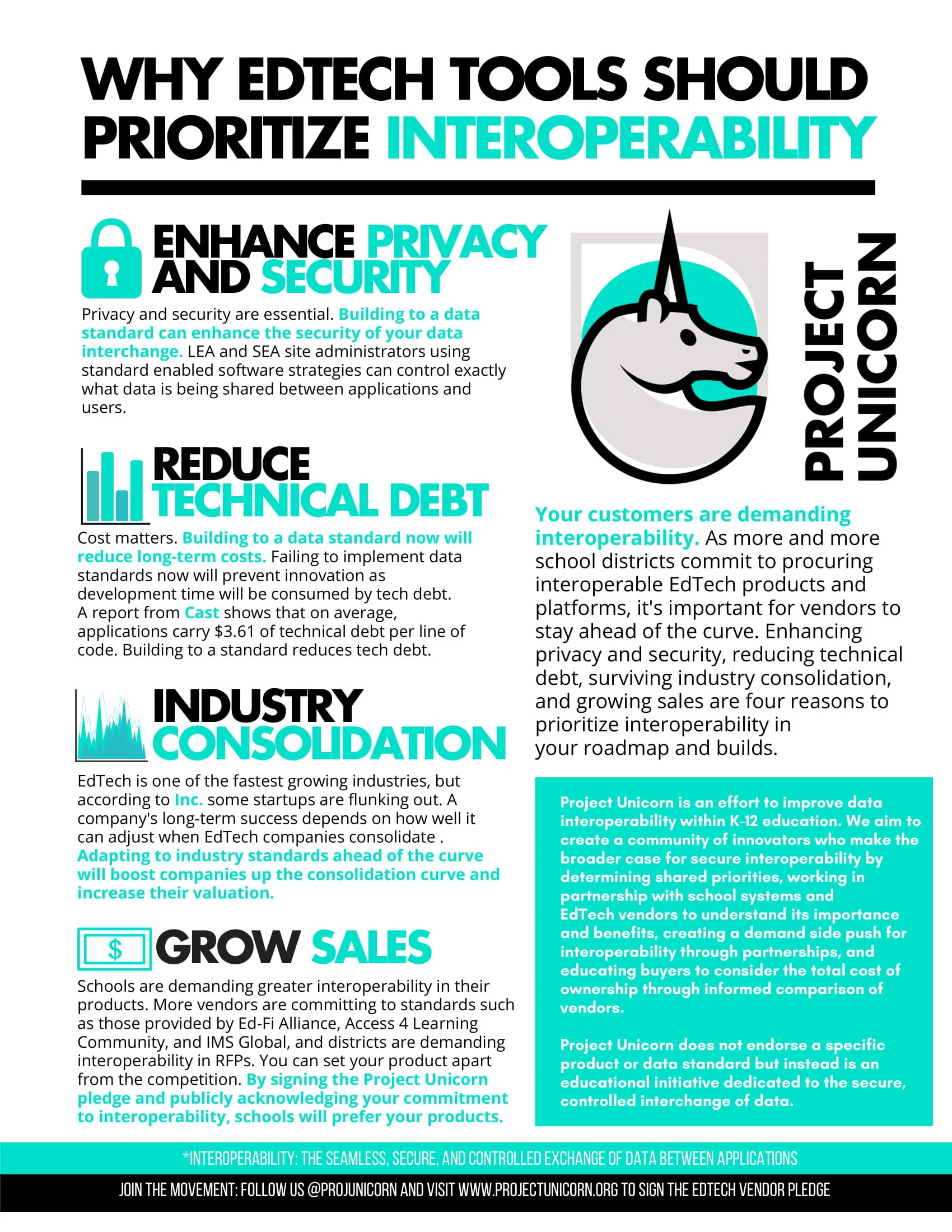
Why Vendors Should Prioritize Interoperability
Your customers are demanding interoperability. As more and more school districts commit to procuring interoperable EdTech products and platforms, it's important for vendors to stay ahead of the curve.